
The Comeback of Stone Milling: Why Health Experts Recommend It
- Apr 13, 2025
- 1 min read
Stone milling—a traditional method once overshadowed by modern milling technologies—is now experiencing a remarkable resurgence. But what’s fueling this comeback? And why are health experts actively recommending stone-milled flour?
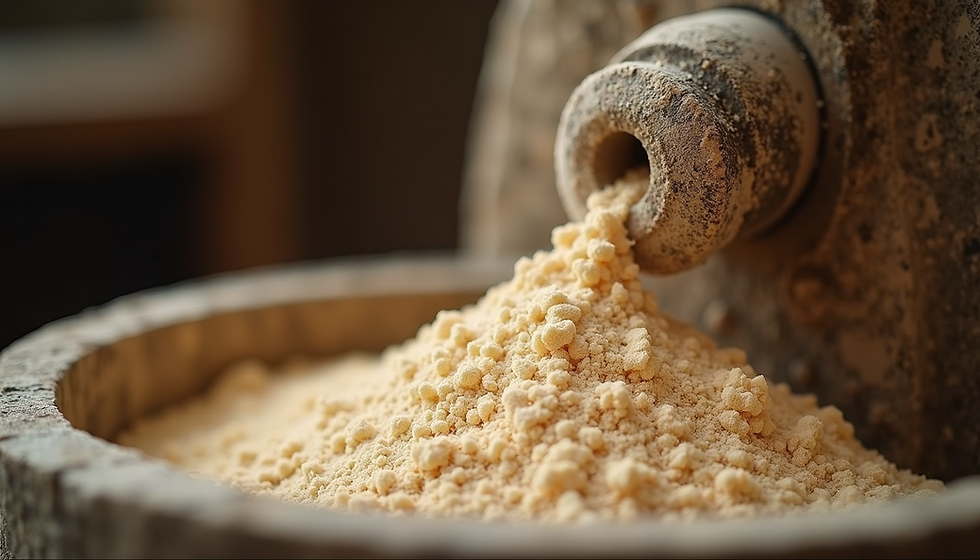
Stone milling is a time-tested technique where grains are gently crushed between large stones, a process that maintains the grain's nutritional integrity. Unlike roller mills, which quickly crush and heat grains, stone mills process grains slowly and gently, preserving essential nutrients such as vitamins, minerals, dietary fiber, and natural oils.
Health experts increasingly emphasize the nutritional benefits of stone milling. Studies suggest stone-ground flour offers a higher concentration of essential nutrients such as Vitamin B complex, zinc, magnesium, and dietary fiber. These nutrients boost immunity, aid digestion, and support overall metabolic health.
Fun fact: Stone milling has deep historical roots, dating back thousands of years. Ancient civilizations, including the Egyptians and Romans, valued stone-ground flour for its superior taste and nutritional benefits.
But it's not only nutrition drawing people back to stone milling. Experts highlight that stone-milled flour enhances flavor and texture due to the preservation of natural grain oils, resulting in tastier baked goods loved by chefs and food enthusiasts alike.
Moreover, stone milling aligns with sustainable and environmentally friendly practices, making it an excellent choice for eco-conscious consumers. It requires significantly less energy, produces minimal waste, and often utilizes locally sourced grains, reducing overall environmental impact.


Comments